

DB/SQL
Data modeling, SQL and NoSQL, transactions, indexes, integrity, and migrations.
Articles
18 total
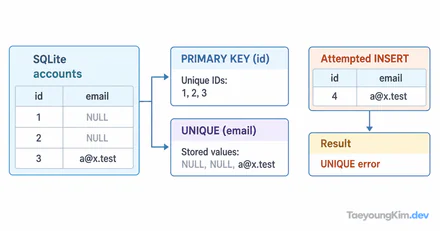
Why SQLite UNIQUE allows multiple NULLs: Compared with PRIMARY KEY
Insert two NULL emails and one real email in SQLite, then compare UNIQUE, empty strings, NOT NULL, GROUP BY, and an INTEGER PRIMARY KEY.
DB/SQL3 min
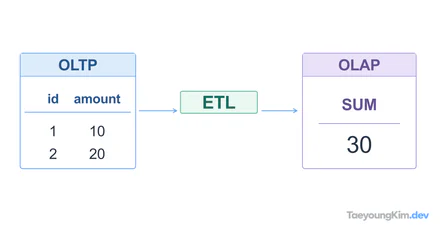
Data and database operations vocabulary: ETL, OLTP, OLAP, and replication
Distinguish analytical data stores, transaction workloads, metadata, tuning, replication, and SQL integration tools.
DB/SQL4 min
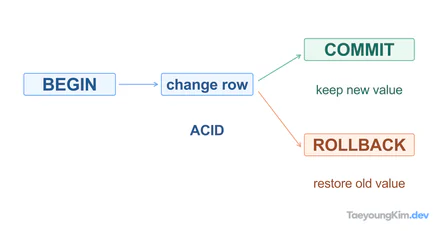
COMMIT, ROLLBACK, and ACID: Transaction Terms in Context
Distinguish transaction completion, partial rollback, ACID properties, recovery terms, and concurrency control.
DB/SQL3 min
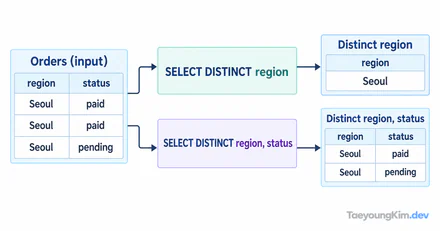
SQL DISTINCT across multiple columns: why a value still appears twice
When DISTINCT still returns two Seoul rows, check whether you selected one column or distinct combinations of several columns.
DB/SQL2 min
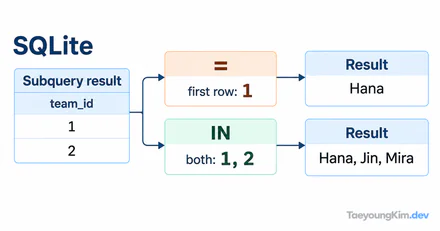
SQL subquery with = vs IN: Why a multirow team filter misses employees
Trace a two-row subquery in SQLite and compare scalar = behavior with IN when selecting employees from every team in a region.
DB/SQL3 min
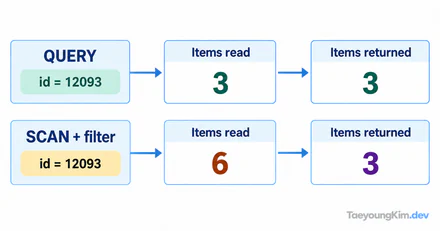
DynamoDB Query vs Scan: Why a filter does not reduce read capacity
Compare Query and Scan on six student scores, then inspect FilterExpression, ScannedCount, Count, consumed capacity, and pagination.
DB/SQL4 min
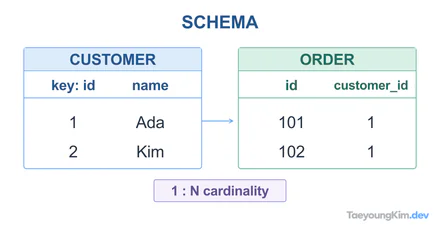
Data modeling vocabulary: Cardinality, keys, relations, and schemas
Learn how cardinality, constraints, keys, relations, tuples, schemas, and database views fit into a data model.
DB/SQL4 min
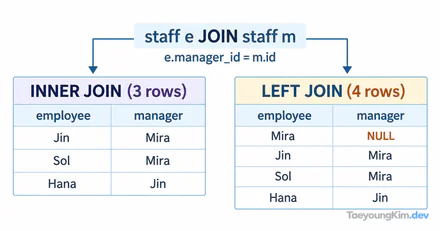
SQL self join: Why INNER JOIN hides an employee without a manager
Join employees to managers in the same table, then compare INNER JOIN and LEFT JOIN when the top employee has no manager.
DB/SQL3 min
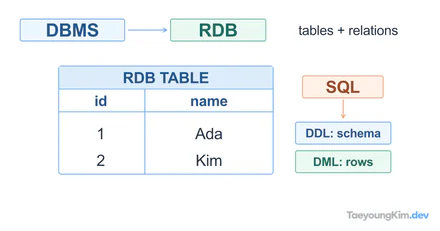
Database vocabulary: DBMS, RDB, SQL, DDL, DML, and related terms
Distinguish a DBMS from stored data, JDBC and ODBC from SQL, and schema, data, permission, and transaction commands by their roles.
DB/SQL4 min